Jyotirao Wankhede grew up in a small village in Vidarbha, Maharashtra, studying in a government school where students from multiple classes sat together in a single room.
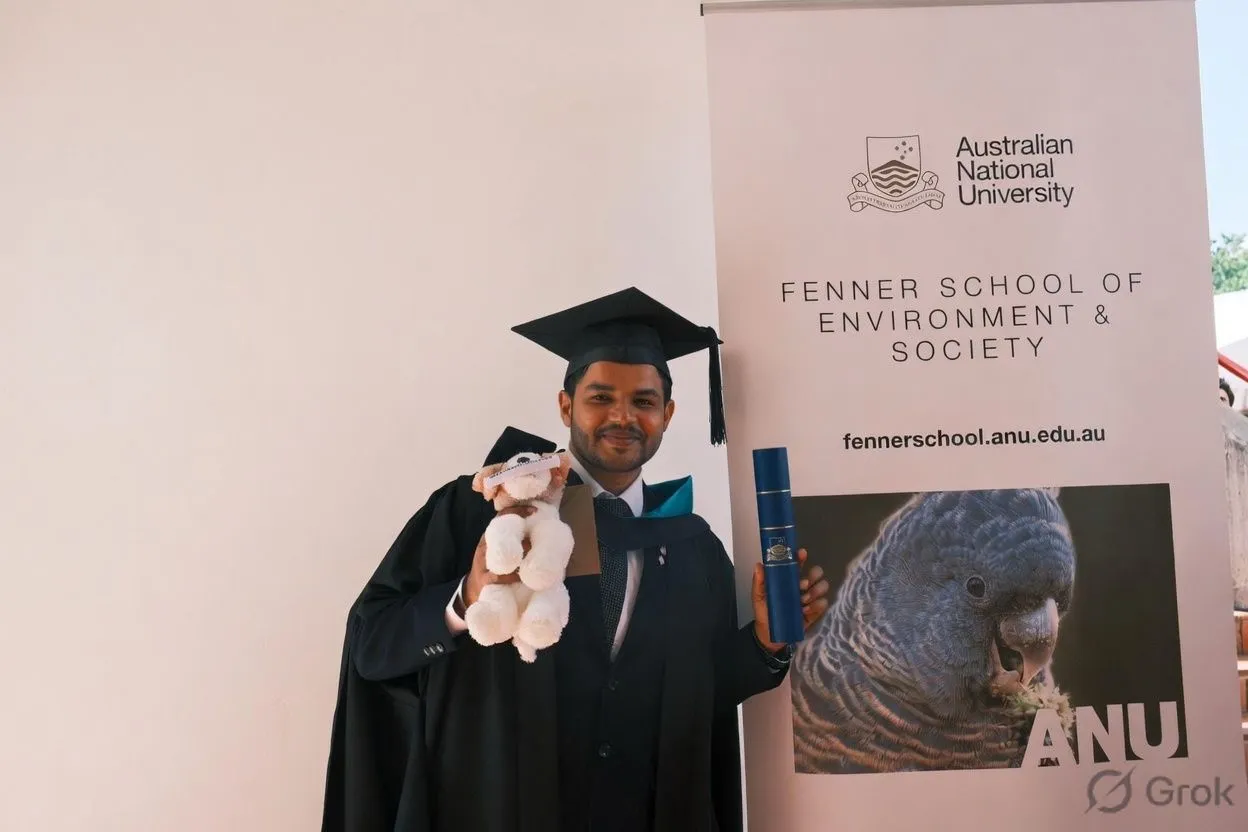
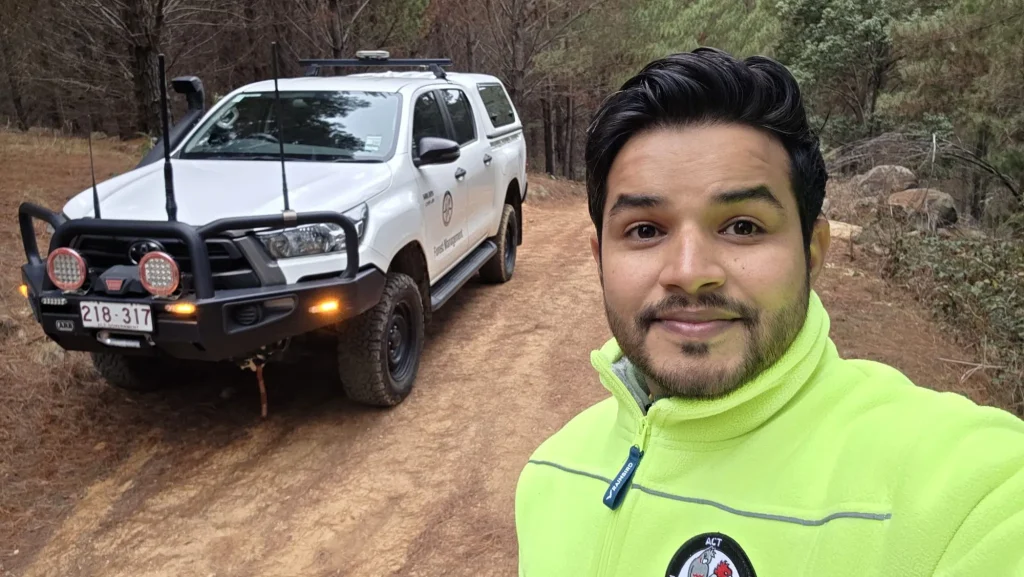
Today, he is working as a Forest Management Officer with the Government of Australia after completing his Master’s in Forestry at the Australian National University (ANU), Canberra.
Where it began
Jyotirao’s early education did not point toward research or environmental science. After school, he pursued his bachelor’s degree through an Open University so that he could work part-time and support himself and his family. Financial constraints made it impossible for him to afford regular college education.
To sustain himself, he worked at roadside dhabas, Domino’s Pizza, and other restaurants as a waiter, managing work and studies together.
“At that time, I was studying just to pass. I didn’t know what I was capable of or what I could do in life.”
Things began to change when he came to Nalanda Academy in 2016–17. For the first time, he was introduced to subjects like Environment, Geography, and Climate Change. These ideas stayed with him and gradually began shaping his interests.
A change in direction
From Nalanda, Jyotirao went on to pursue a Master’s in Climate Change and Sustainability Studies at TISS Mumbai. It was a complete shift from his earlier path, but by then, he had begun to understand what he wanted to do.
After graduation, he worked in the conservation and development sector — first as a researcher and later managing projects on climate, water, and communities. His work took him to places like Ranthambore Tiger Reserve, where he worked closely with the Forest Department.
At the same time, he began thinking about studying further — and slowly, the idea of going abroad started taking shape.
Preparing for the next step
The process of applying abroad was long and demanding. While working full-time, Jyotirao spent nearly two years preparing his applications — researching universities, writing and rewriting his statement of purpose, reaching out to professors, and building a strong application.
He approached the process patiently — making notes, tracking options, and continuously refining his work.
“The process is not complicated. You just have to find the information, understand it, and keep working on it step by step.”
At the end of this journey, he received offers from the Australian National University and the University of Manchester. He chose ANU — a research programme that aligned closely with his field experience and long-term interests in forestry and conservation.
At ANU: Deepening the work
At the Australian National University, Jyotirao focused on forestry, conservation, and how ecological systems are managed in practice. The programme allowed him to connect his field experience in India with a more research-oriented approach — moving from working on the ground to understanding systems, data, and long-term environmental planning.
This phase helped him deepen both his technical understanding and his perspective — preparing him for the work he is doing today. Over time, this learning translated into his current role with the Australian Capital Territory (Canberra) Government, where he now works on managing forest systems in practice.
Learning the process
In the beginning, even basic things like writing an SOP felt unfamiliar. He did not know where to start or how to structure it. Over time, he learned by doing — writing rough drafts, revising them repeatedly, and improving clarity with each attempt.
The same approach helped him while reaching out to professors. Instead of generic emails, he carefully studied their work and explained how his own experience connected to it. He was able to secure an English language test waiver by providing supporting documents from his previous education and workplace.
What this journey shows
Jyotirao’s journey does not follow a straight line. It moves from a village classroom to Nalanda, from there to TISS, then to fieldwork in Rajasthan, and eventually to a global research university — and now to a professional role in Australia’s public sector. At each stage, the direction became clearer, slowly, over time.
Jyotirao often reflects on the role Nalanda played in his journey — not just in terms of academics, but in building confidence and clarity.
These are not isolated successes. They are part of a larger Nalanda ecosystem where students from some of the most marginalised backgrounds gradually find their place in global spaces. And in that sense, each journey is personal but also collective.