The Curiosity Lecture is an online lecture series by Abhiyan Labs, designed to ignite curiosity in young minds by exploring the fascinating world of scientific knowledge and discovery.
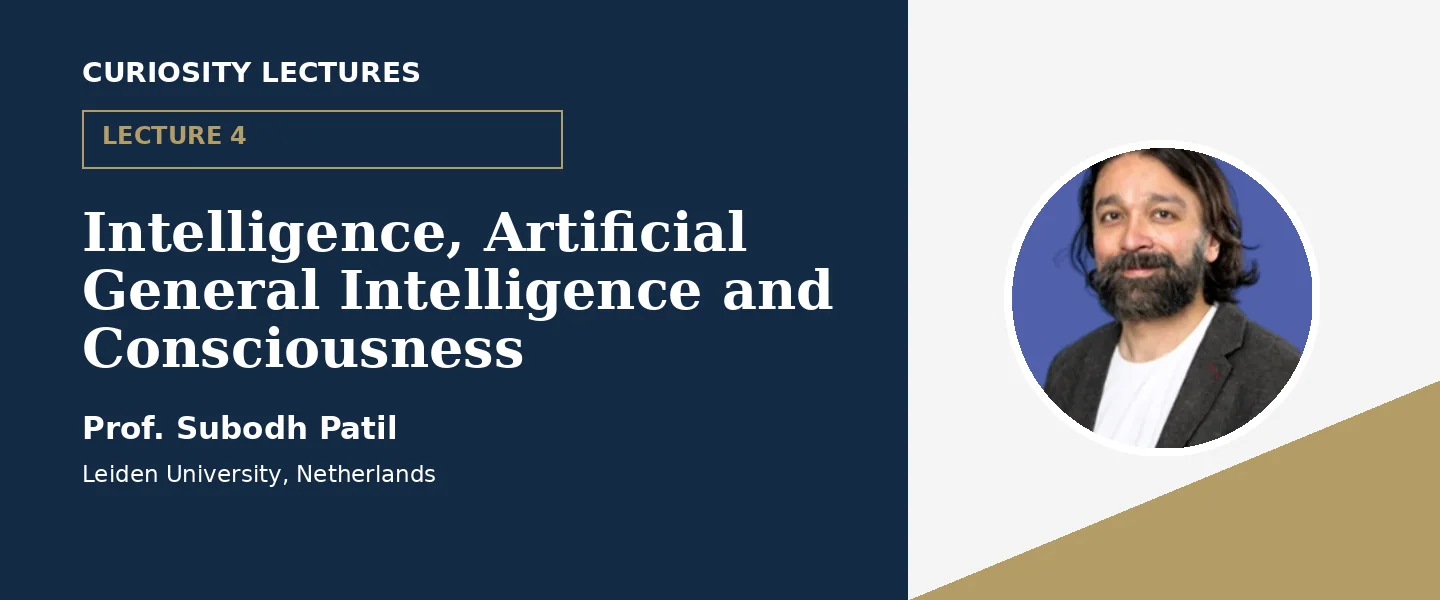
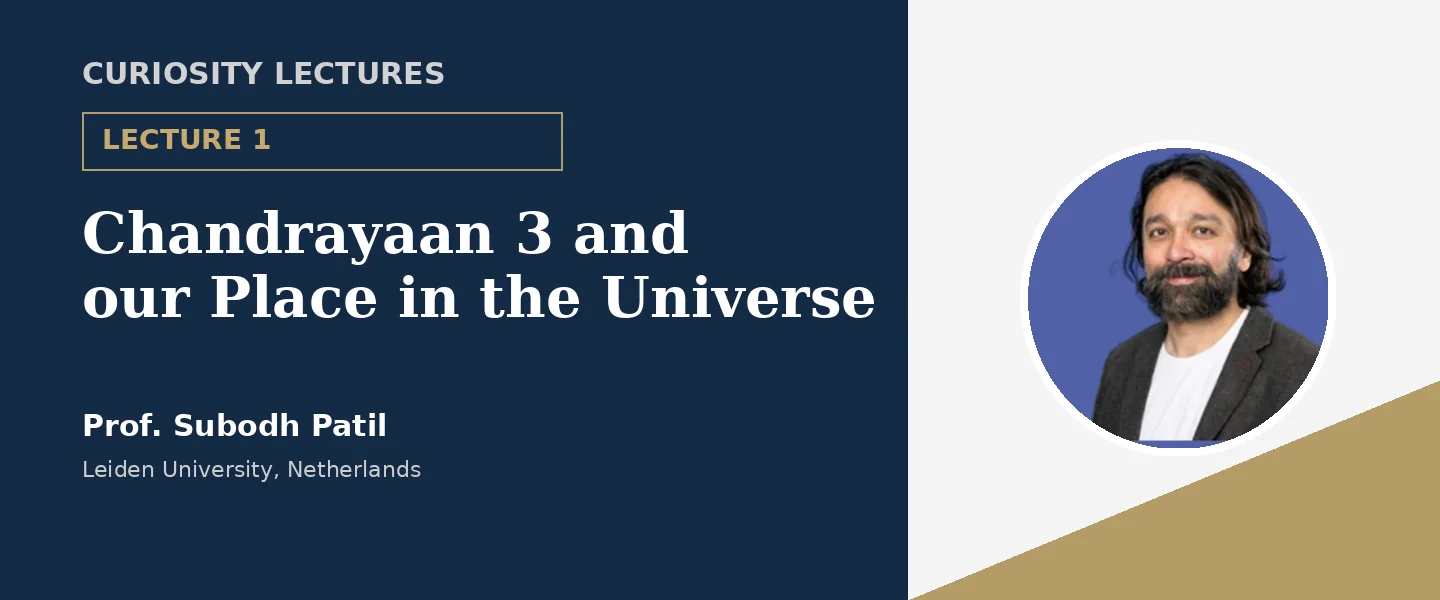
The lecture by Professor Subodh Patil (Professor, Leiden University, The Netherlands) explored India’s lunar mission and its broader implications for space science and humanity’s understanding of the cosmos. Professor Patil provided an overview of Chandrayaan 3’s achievements, particularly its historic soft landing on the Moon’s South Pole, a region with potential ice deposits critical for future lunar exploration and habitation. He detailed the complexities of orbital mechanics, ISRO’s innovative and cost-efficient approach to space exploration, and the technical challenges of navigating and landing in polar orbits.
- Chandrayaan 3’s historic Moon landing and what it means for India and global space science
- Orbital mechanics and ISRO’s cost-efficient approach to space exploration
- Light travel time and the mind-bending scale of the cosmos
- Satellites, weather forecasting and the everyday benefits of space science
- The search for extraterrestrial life and our place in the universe
India’s Moon Mission and Our Cosmic Address
How Big Is Our Universe?
The lecture also addressed the scale of the universe, emphasizing humanity’s small yet significant place within it. Using light travel time as a measure, he described distances from Earth to the Moon, nearby planets, and distant stars, highlighting the vastness of space and the improbability of interstellar communication due to current technological and physical constraints.
Why Space Exploration Matters
Professor Patil reflected on the broader value of space exploration, dismissing criticisms that it detracts from addressing terrestrial issues. He argued that advancements in space science directly benefit humanity, citing examples such as accurate weather forecasting and agricultural improvements enabled by satellite technology. Additionally, he celebrated ISRO’s success as a testament to India’s ingenuity and as a source of global recognition.
Curiosity, Life Beyond Earth and the Human Quest
The session concluded with discussions on scientific curiosity, the search for extraterrestrial life, and the philosophical significance of space exploration, emphasizing humanity’s enduring quest to understand its place in the universe.