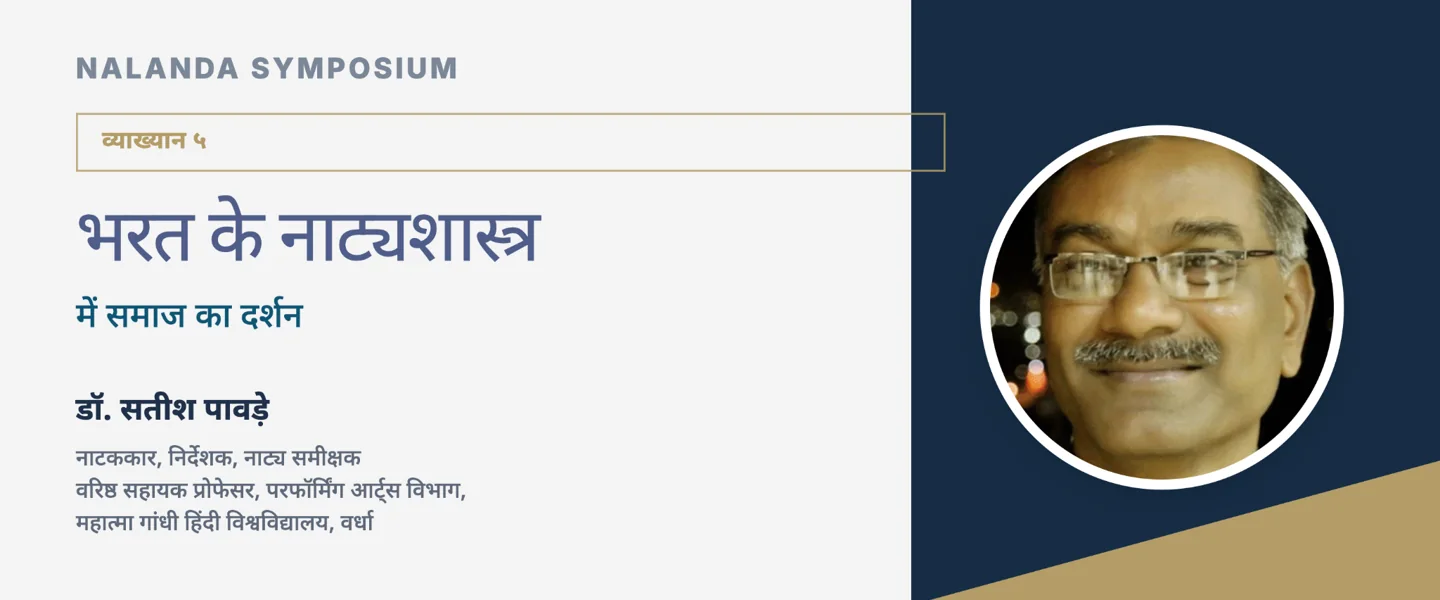
The Nalanda Symposium is a monthly online lecture series showcasing scholars from diverse disciplines who share their research, insights, and expertise.
Dr. Satish Pawade’s lecture explores the historical, cultural, and philosophical dimensions of the ‘Natyashastra’, an ancient Indian treatise on performing arts attributed to Bharat Muni. This multidisciplinary text, spanning 37 chapters and 6,000 shlokas, integrates drama, music, dance, literature, and other art forms, serving as a comprehensive guide to dramaturgy. Dr. Pawade highlights its socio-cultural context, reflecting the Vedic and caste-based Chaturvarna system, where artists, often categorized as Shudras, played a vital yet marginalized role in society.
- Historical origins and authorship of the Natyashastra
- Core theatrical concepts: rasa, bhava, and abhinaya
- The Chaturvarna system and marginalization of performing artists
- Drama as the “fifth Veda” — contested identity and legacy
- Relevance of ancient Indian dramaturgy for contemporary scholarship
The Natyashastra: A Socio-Cultural Framework
Drama as the Fifth Veda
The Natyashastra defines key theatrical elements like rasa (emotion), bhava (expression), and abhinaya (acting), categorizing acting into verbal, physical, emotional, and costume-based forms. It portrays drama as the “fifth Veda,” derived from the four primary Vedas, though the identity of Bharat Muni remains debated. The text reinforces societal hierarchies, often depicting upper-caste characters and limiting women’s roles to beauty, love, and servitude, reflecting patriarchal norms. Its acknowledgment of multiple Prakrit languages alongside Sanskrit and its geographical scope highlight a rich, multilingual society spanning ancient India and beyond.
Caste, Society, and the Performing Arts
Dr. Pawade critiques the text for perpetuating social and gender inequalities but also underscores its historical and cultural significance. He emphasizes the need for critical analysis to appreciate its contributions to the arts while addressing its biases. The lecture positions the Natyashastra as a mirror of ancient Indian society, offering valuable insights into its traditions and structures while remaining relevant for contemporary study and reflection.