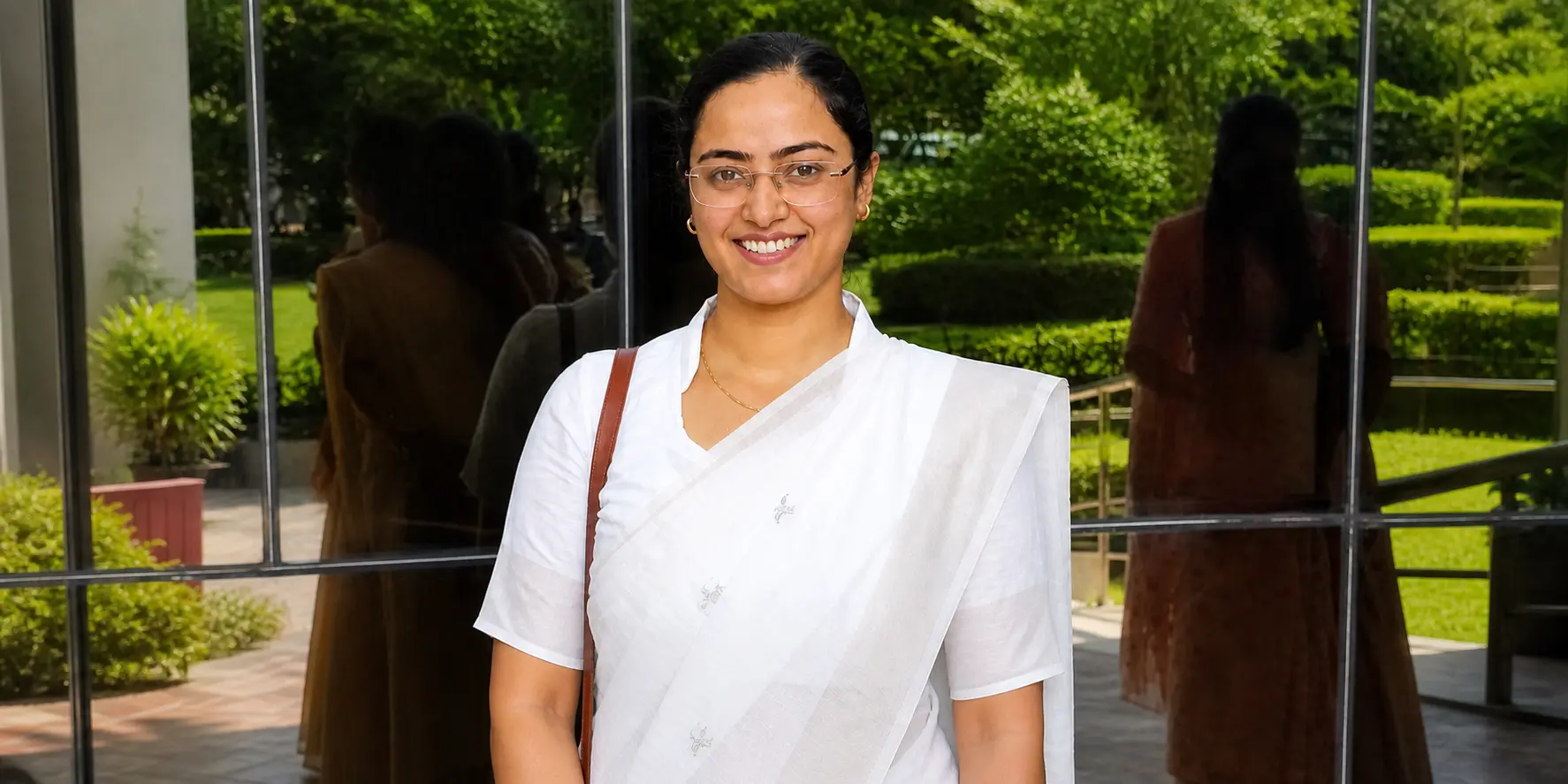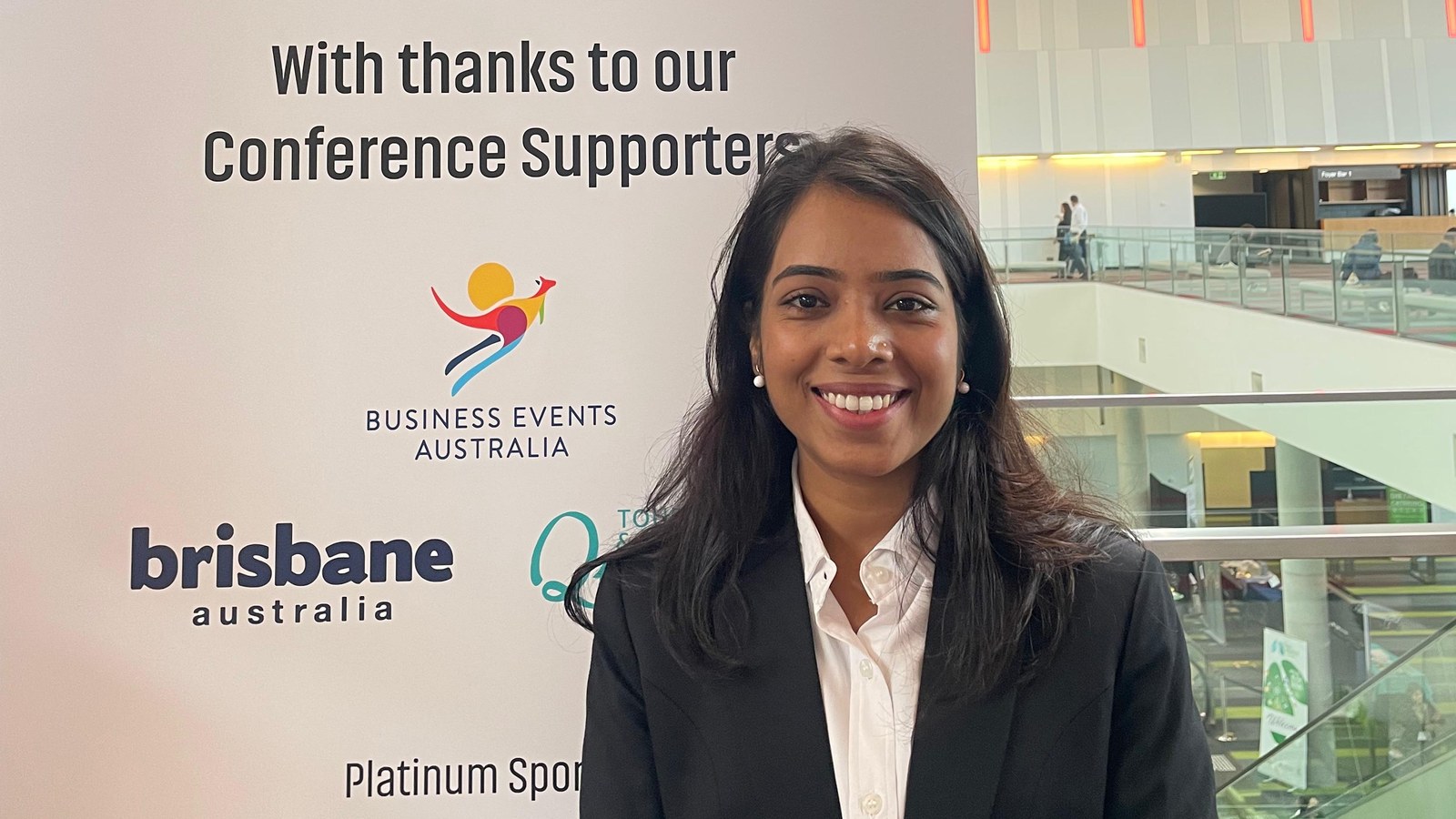
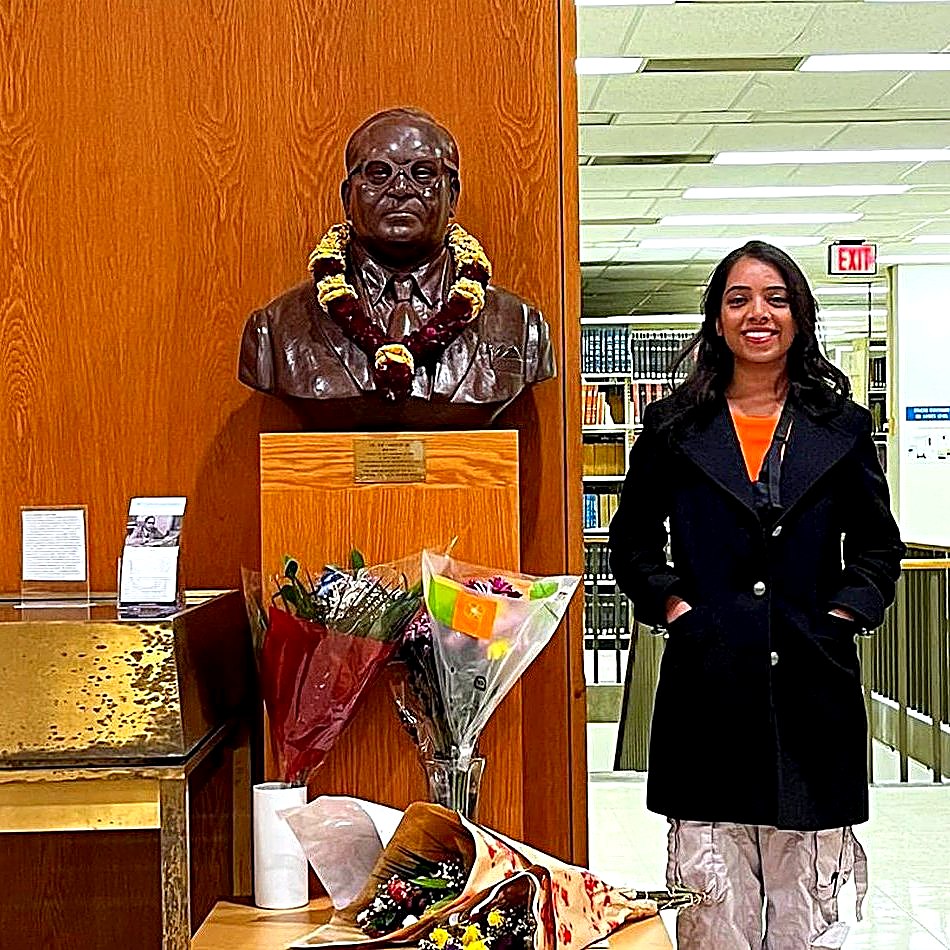
Komal Gajbhiye, the daughter of an auto-rickshaw driver and a student of Nalanda’s 2018–19 batch, did not grow up imagining a life in research. A Master’s degree — let alone a PhD — felt distant. Today, she is pursuing a PhD in Biostatistics and Demography at IIPS Mumbai, and has presented research at conferences in the United States and Australia. Komal’s testimony, part of Students Speak series — conversations with Nalanda alumni on their journeys into higher education and beyond — is embedded below.
Where She Comes From
Komal grew up in Wardha in a family that worked hard for every small step forward. Her father drives an auto-rickshaw. Her mother manages the home. Money was often limited, but her parents never discouraged her education.
After completing her BSc in Mathematics, Computer Science, and Electronics, she began preparing for competitive examinations.
She cleared the Group D Railway examination. On paper, it was the kind of result her family had hoped for — a government post, a stable salary. But when she understood what the work would actually involve, she paused. “I will only be serving water on a tray,” she remembers thinking. That was not the life she wanted to step into. She turned the post down and went back to her preparation.
At the time, she had never heard of institutions like TISS, JNU, or IIPS. The idea of studying at a central institute — let alone pursuing research — was not yet part of her world.
A Classroom Full of Students
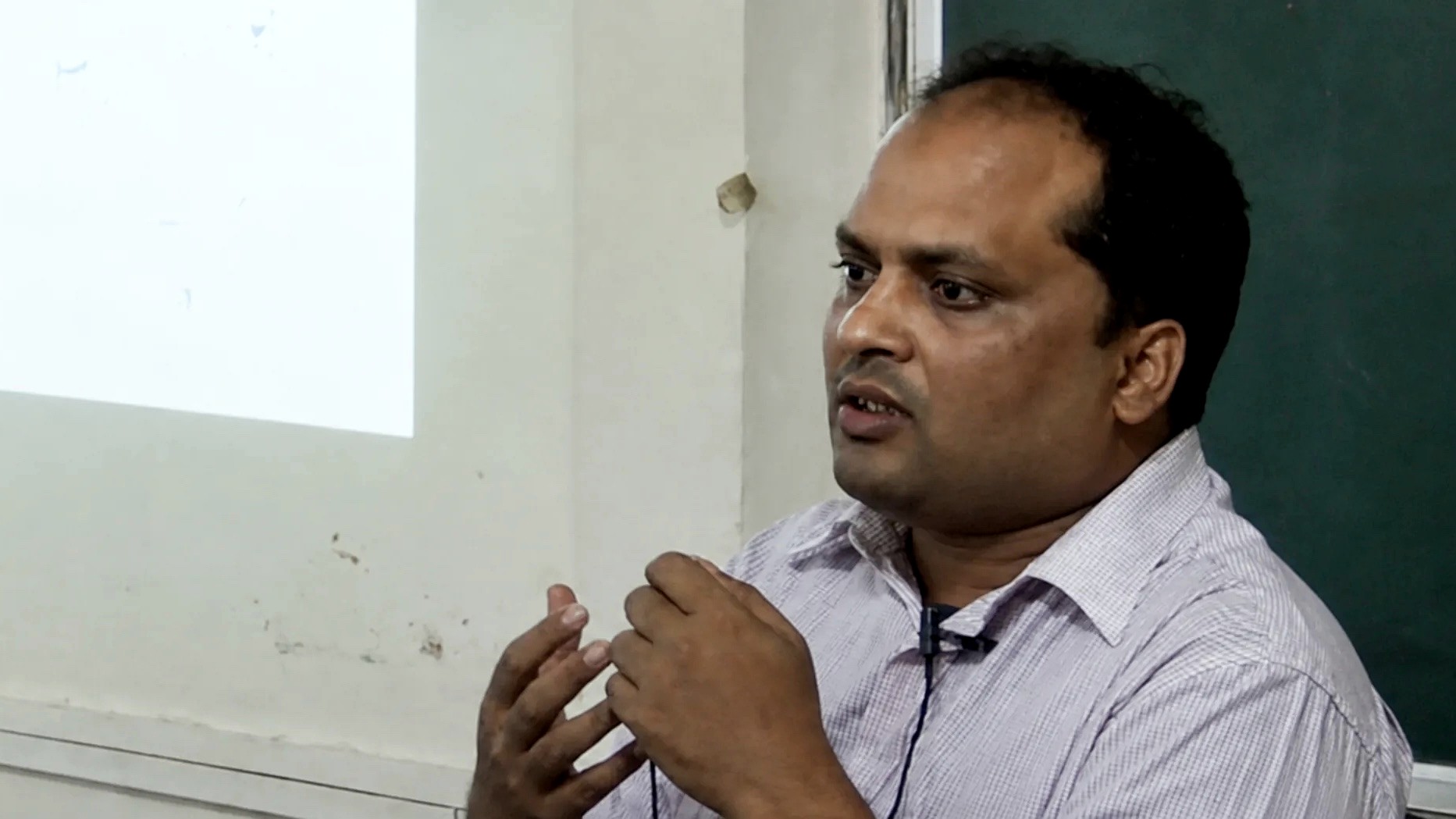
Someone once told Komal that Anoop Sir at Nalanda Academy taught Geography exceptionally well.
“I thought, okay, let me go and learn Geography,” she recalls.
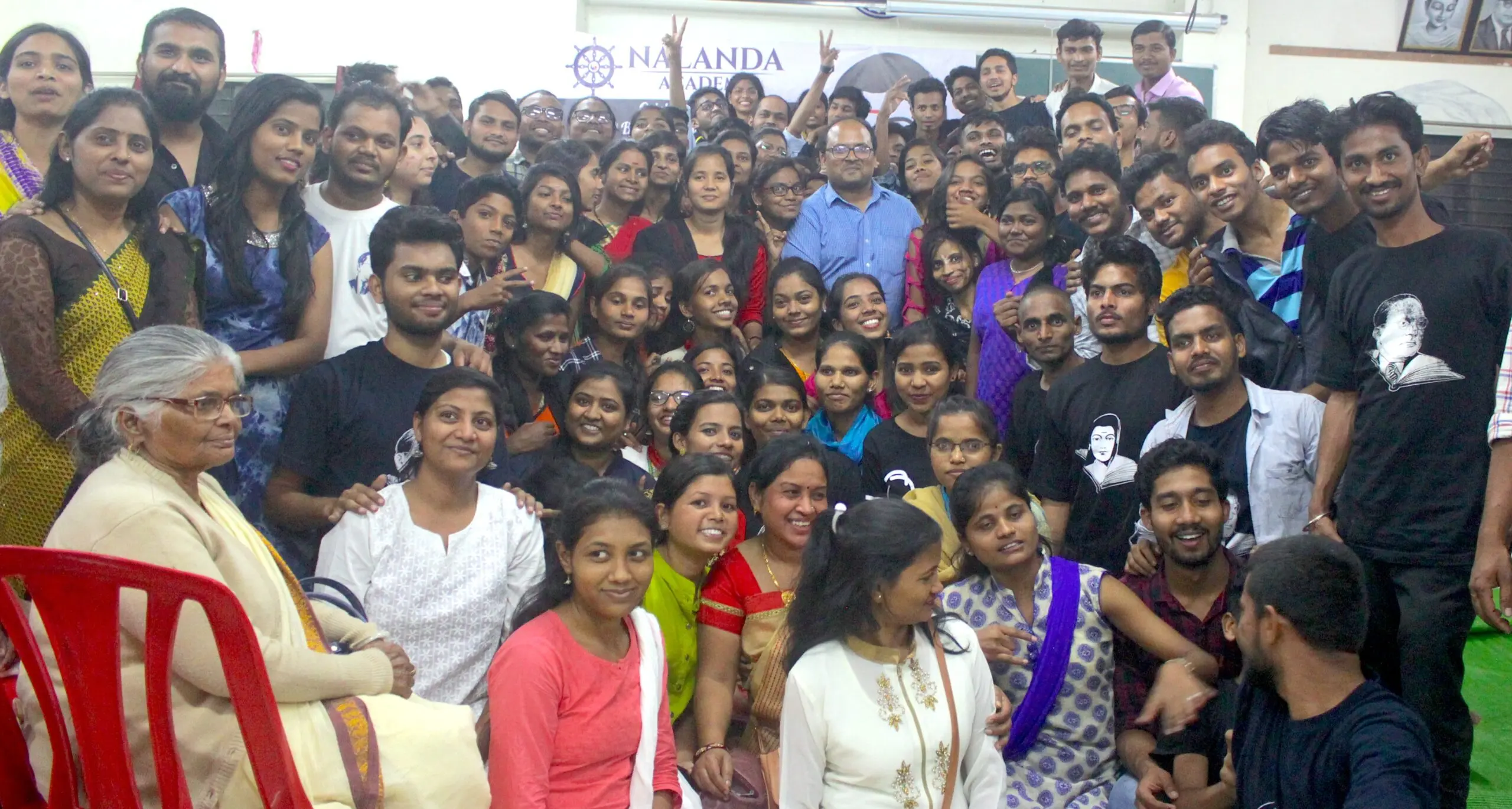
When she first arrived at Nalanda, the classroom was completely full. There was barely any space to sit. But she stayed.
It was inside that crowded classroom that she first heard names like TISS, APU, and JNU. More importantly, it was the first time she sat in a room where students like her were expected to imagine futures no one in their families had walked into before.
Slowly, her own sense of what was possible began to widen.
Learning to Read, Learning to Speak
At Nalanda, each morning began with reading newspaper editorials. Students were randomly asked to stand before everyone and explain what they had understood.
For Komal, that morning ritual quietly became the most important class of her day.
“How to read a sentence — that’s where my journey began. The confidence to speak and explain in front of all the students — that confidence I got from Nalanda.”
The learning extended far beyond entrance preparation. Alongside classes in Maths, Reasoning, History, and other subjects, students picked up practical academic skills — working on Word documents, making presentations, organising thoughts into bullet points, speaking in front of a room.
Years later, those same skills would travel with her into research conferences, academic presentations, and professional work.
Choosing IIPS
When admissions opened, Komal applied widely — to TISS, APU, and IIPS. She cleared the entrance examination for TISS and also received admission to the MA Education programme at Azim Premji University.
Then came IIPS.
“I told my family that IIPS is a central institute,” she remembers. “There is only one such institute in the whole country.”
Her family hesitated. Mumbai felt too far away. The fees felt overwhelming.
Anoop Sir offered to support her financially through Nalanda, but her father chose instead to take a loan from a local self-help group so she could continue her studies.
“I never thought that, coming from such a background, I would even pursue higher education.”
The Only Marathi-Speaking Girl in the Batch
At IIPS, students had arrived from across India. Komal was the only Marathi-speaking girl in her batch.
Everything felt new — the academic culture, the expectations, the presentations.
But she also realised she carried an advantage many others did not.
“At Nalanda, I had already learned some basic things — working on Word files, writing bullet points, making PPTs. All this helped me a lot at IIPS,” she says.
In her very first semester, while still adjusting to the institute, she began working on a research paper. She did not fully know what academic research was supposed to look like. She simply began.
That year, at the institute conference, she became the only student from her batch to present a paper.
From a Master’s Degree to a PhD
After completing her Master’s, opportunities arrived one after another.
Komal worked as a biostatistician at Tata Memorial Hospital before joining IIPS itself as a research assistant. During this period, she cleared the NET-JRF examination and later received the Maulana Azad National Fellowship, which would support her doctoral research.
“I had never imagined that I would one day pursue a PhD. In fact, I had never even thought that I would do a Master’s degree, or study in Mumbai.”
The journey that once seemed impossible had quietly become her life.
Taking Her Research to the World
In 2024, Komal travelled to the United States to present her work at the Population Association of America (PAA) Annual Meeting in Columbus, Ohio. Her paper examined how caste, gender, and disability intersect to shape access to social protection and public support systems in India.
The following year, in 2025, her research was selected for the International Population Conference in Brisbane, Australia. There she presented a paper exploring homelessness in India and its relationship with poverty, unemployment, migration, and urbanisation.
For a young woman who had once entered Nalanda simply looking for a Geography class, the world had become unimaginably larger.
Dreaming Bigger, Looking Back
Today, Komal dreams of becoming a professor. But for her, success is meaningful only when it creates space for others to move forward as well.
“As you move ahead, your community also moves ahead, inspired by you. As you move forward, you start thinking about doing something for the community. All these things are taught at Nalanda from the beginning.”
She often speaks about self-dignity — something she says she began to truly understand only after entering higher education. She speaks about the culture at Nalanda, where knowledge is shared freely rather than guarded. And she speaks about Anoop Sir.
“The way Anoop Sir works for the community — I also want to work in the same way. This is what I have learnt from him: how to pay back to the community.”
From a small town in Wardha — where her father drives an auto-rickshaw and her mother manages the home — to a PhD at IIPS Mumbai, to research conferences in the United States and Australia: Komal Gajbhiye’s journey is ultimately a reminder that education does not begin with degrees or institutions.
Sometimes, it begins with learning how to read a sentence aloud with confidence.
And sometimes, that changes the direction of an entire life.