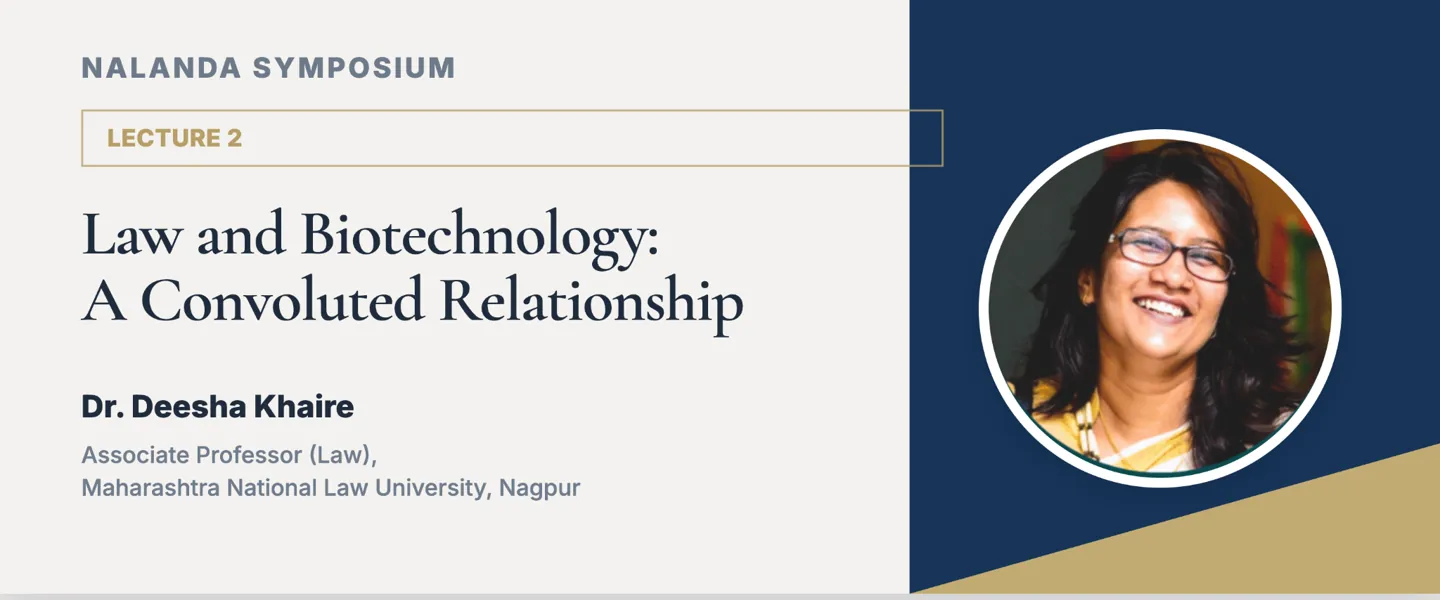
The Nalanda Symposium is a monthly online lecture series showcasing scholars from diverse disciplines who share their research, insights, and expertise.
Dr. Deesha Khaire’s (Associate Professor, Maharashtra National Law University, Nagpur) lecture examined the complex relationship between Biotechnology and the Law, focusing on advancements like cloning, genetic engineering, and reproductive technologies. She discussed the need for legal frameworks to balance innovation with ethical and human rights considerations.
- How biotechnology challenges existing legal and ethical frameworks
- Reproductive rights and the regulation of IVF, genetic screening and cloning
- Cryonics and how it blurs legal definitions of life and death
- India’s surrogacy laws, abortion rights and legal gaps in biotech governance
- The call for stronger bioethics, equitable access and social accountability
Where Innovation Meets the Law
Reproductive Rights, Cloning and the Ethics of Life
Key topics included reproductive rights, where technologies like IVF and genetic screening raise questions about ownership and regulation; cloning, which presents ethical dilemmas around identity and human dignity; and cryonics, which challenges legal definitions of life and death.
India’s Bioethics Landscape and the Path Forward
The discussion also covered India’s surrogacy laws, abortion rights, and the lagging pace of legal adaptations to biotechnological progress. Dr. Khaire emphasized the importance of bioethics equitable access to technology while calling for stronger regulations and social accountability to ensure responsible development.