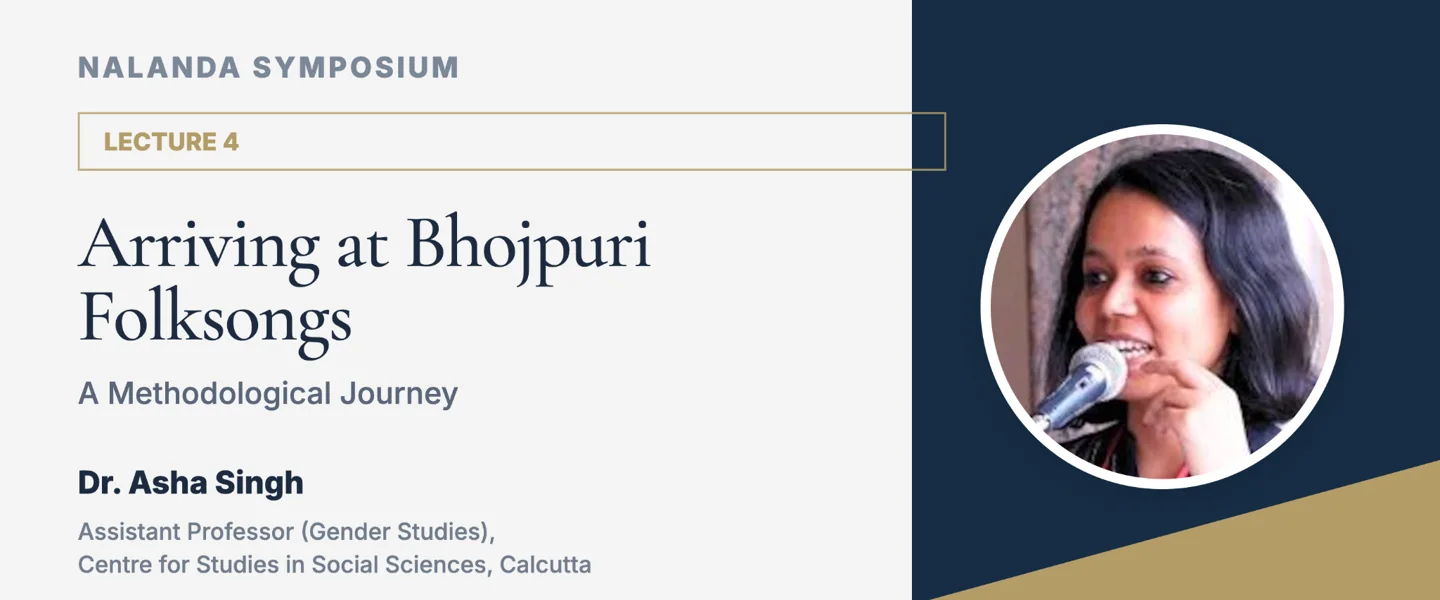
The Nalanda Symposium is a monthly online lecture series showcasing scholars from diverse disciplines who share their research, insights, and expertise.
Dr. Asha Singh’s lecture explores her journey in studying Bhojpuri folk songs, focusing on the cultural and social lives of Bhojpuri-speaking communities, especially women. She shares how her Bhojpuri heritage shaped her identity and influenced her shift from oral traditions to academic research.
- Methodological approaches to studying Bhojpuri folk traditions
- The insider/outsider position in ethnographic field research
- How oral culture shapes Bhojpuri women’s identity and resistance
- Bhojpuri as a marginalized language: between dialect and literary tradition
- Folk songs as archives of feminist memory and community identity
Bhojpuri Folk Songs as Women’s Voice
From Bhojpuri Heritage to Scholarly Research
Dr. Singh talks about the challenges she faced, like choosing research topics and finding material, as Bhojpuri culture is mostly oral and has limited written records. She also discusses her role as both an insider (being part of the community) and an outsider (as a trained scholar), balancing traditional practices with academic analysis.
The Insider-Outsider Dilemma in Fieldwork
The lecture highlights how Bhojpuri, often seen as a dialect, is marginalized in society, and how oral and written forms of expression impact rural women. Dr. Singh explains that Bhojpuri folk songs allow women to voice their struggles and question social norms, even though their economic and social conditions often remain the same.
Oral Culture and Language Marginalization
She also critiques how Bhojpuri culture is commercialized in media and academia, calling for fair and inclusive ways to study and represent marginalized groups.
Watch the lecture: